
Am I a Candidate for Minimally Invasive Spine Surgery?
Quick Summary
Back pain, neck pain, and nerve-related symptoms can significantly affect your ability to work, exercise, sleep, and enjoy everyday activities. If conservative treatment has not provided adequate relief, you may be wondering whether minimally invasive spine surgery is an option.
Advances in surgical technology have made it possible to treat certain spinal conditions through smaller incisions while minimizing disruption to surrounding muscles and tissues. However, not every patient or spinal condition is appropriate for a minimally invasive procedure.
At Pinnacle Spine & Neurosurgery, Dr. Gautam Gandhi evaluates patients throughout Little Rock, Conway, Hot Springs, and Central Arkansas to determine whether minimally invasive spine surgery may be appropriate.
What Is Minimally Invasive Spine Surgery?
Minimally invasive spine surgery (MISS) refers to surgical techniques that use smaller incisions and specialized instruments to access the spine while limiting disruption to surrounding muscles and soft tissues.
Traditional open spine surgery may require more extensive exposure of the spinal structures. Minimally invasive techniques attempt to accomplish the same surgical goals through a less disruptive approach when appropriate.
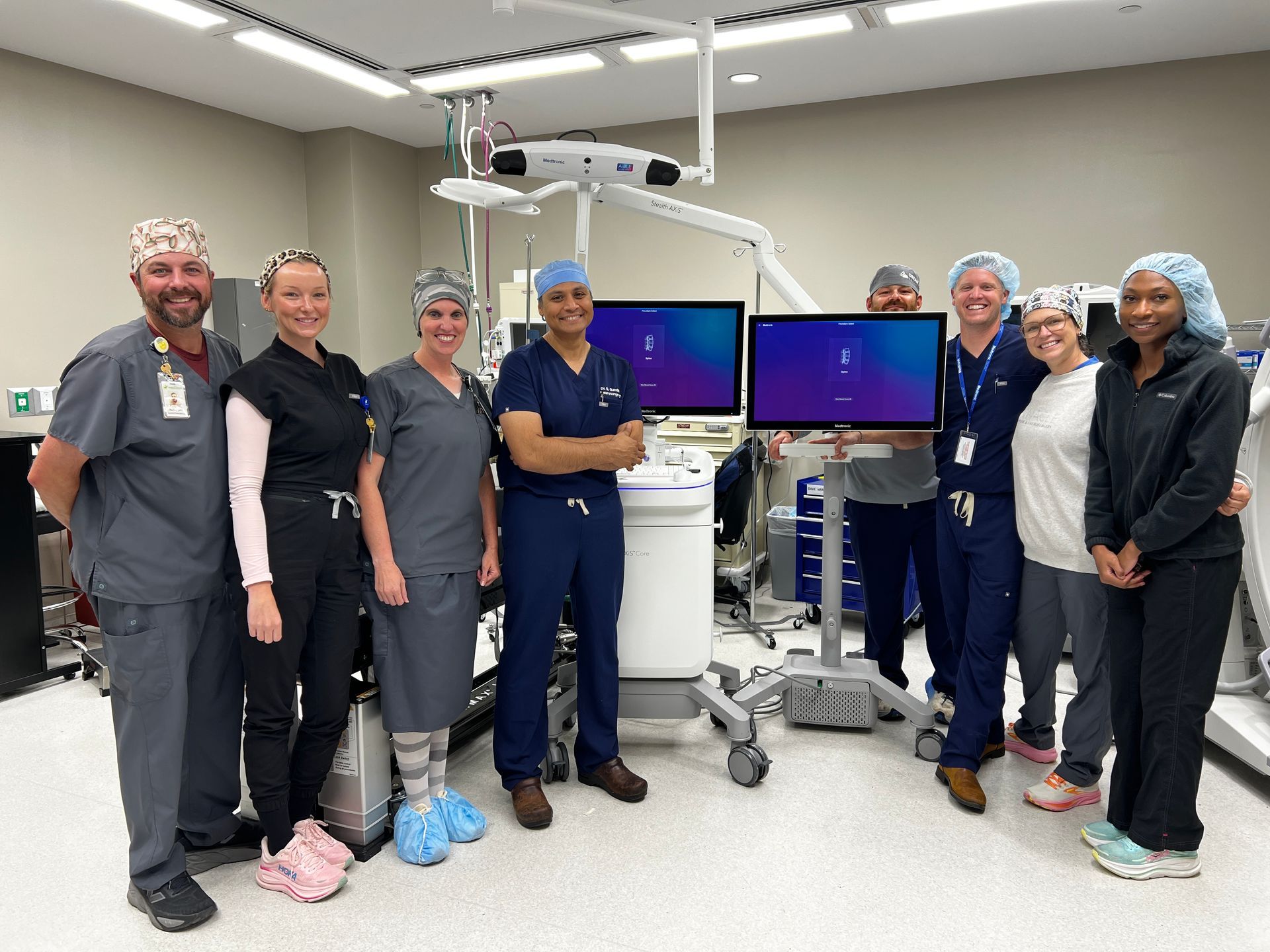
Depending on the procedure, these techniques may involve tubular retractors, endoscopic cameras, microscopes, specialized instruments, or advanced surgical navigation.
Potential advantages include:
- Smaller surgical incisions
- Less muscle and soft tissue disruption
- Reduced blood loss in selected procedures
- Less postoperative discomfort in some patients
- Shorter hospital stays
- Earlier return to certain activities
- The possibility of outpatient surgery
However, the safety and effectiveness of the procedure depend on the patient's anatomy, diagnosis, and surgical needs. Smaller incisions do not automatically mean a procedure is safer or more effective.
What Conditions Can Be Treated With Minimally Invasive Spine Surgery?
Several common spinal conditions may be treated using minimally invasive techniques.
Herniated Discs
A herniated disc occurs when disc material extends beyond its normal position and irritates or compresses a nearby nerve.
Patients may experience back pain, sciatica, leg numbness, tingling, or weakness.
In selected patients, a minimally invasive discectomy or endoscopic discectomy can remove the portion of disc compressing the nerve.
Spinal Stenosis
Spinal stenosis occurs when the space available for the nerves becomes narrowed, often because of arthritis, thickened ligaments, or degenerative changes.
Symptoms may include leg pain, numbness, weakness, and difficulty walking or standing for prolonged periods.
Minimally invasive decompression or laminectomy may help relieve pressure on the affected nerves.
Degenerative Disc Disease
Degenerative disc disease refers to age-related or other structural changes affecting the spinal discs.
Some patients experience persistent neck or back pain, while others develop nerve compression.
Treatment depends on whether the symptoms arise from the disc itself, nerve compression, instability, or a combination of problems. Selected patients may benefit from minimally invasive decompression, disc replacement, or fusion.
Spondylolisthesis and Spinal Instability
Spondylolisthesis occurs when one vertebra slips relative to another.
In certain cases, spinal fusion may be necessary to stabilize the affected segment.
Some fusion procedures can be performed through minimally invasive approaches using specialized instrumentation, navigation, or robotic assistance.

How Do I Know If I Am a Candidate?
You may be a candidate for minimally invasive spine surgery if:
- You have persistent neck or back pain that has not improved with appropriate conservative treatment.
- You experience radiating arm or leg pain caused by nerve compression.
- You have numbness, tingling, or weakness associated with a spinal condition.
- Your MRI or CT scan identifies a structural problem that matches your symptoms.
- Your condition can be treated effectively through a minimally invasive approach.
- Your overall health allows you to undergo surgery safely.
Not all patients need to complete prolonged conservative treatment. Progressive neurological deficits, spinal cord compression, or other urgent conditions may require earlier surgical evaluation.
Importantly, being a candidate for spine surgery does not automatically mean you are a candidate for minimally invasive spine surgery. The surgical approach must adequately address the underlying problem.
Who May Not Be a Candidate?
Some spinal conditions require a more extensive surgical approach.
Patients with severe spinal deformity, complex instability, extensive scar tissue from previous surgery, certain tumors, infections, or complex multilevel disease may need traditional open surgery or a combination of techniques.
Significant osteoporosis, unusual anatomy, and certain medical conditions may also influence the choice of procedure.
The most appropriate surgical technique is the one that safely and effectively treats the underlying condition, not necessarily the one with the smallest incision.
Is Minimally Invasive Spine Surgery Better Than Traditional Surgery?
Both minimally invasive and traditional open surgery have important roles in modern spine care.
Minimally invasive approaches may reduce muscle disruption and allow faster early recovery for selected procedures. However, traditional approaches may provide better exposure and flexibility for complex reconstruction, deformity correction, or extensive decompression.
Long-term outcomes depend on the diagnosis, procedure, and patient characteristics. A minimally invasive approach is not automatically superior for every condition.
At Pinnacle Spine & Neurosurgery, the priority is selecting the most appropriate surgical strategy for each patient's individual needs.
How Is Surgical Candidacy Determined?
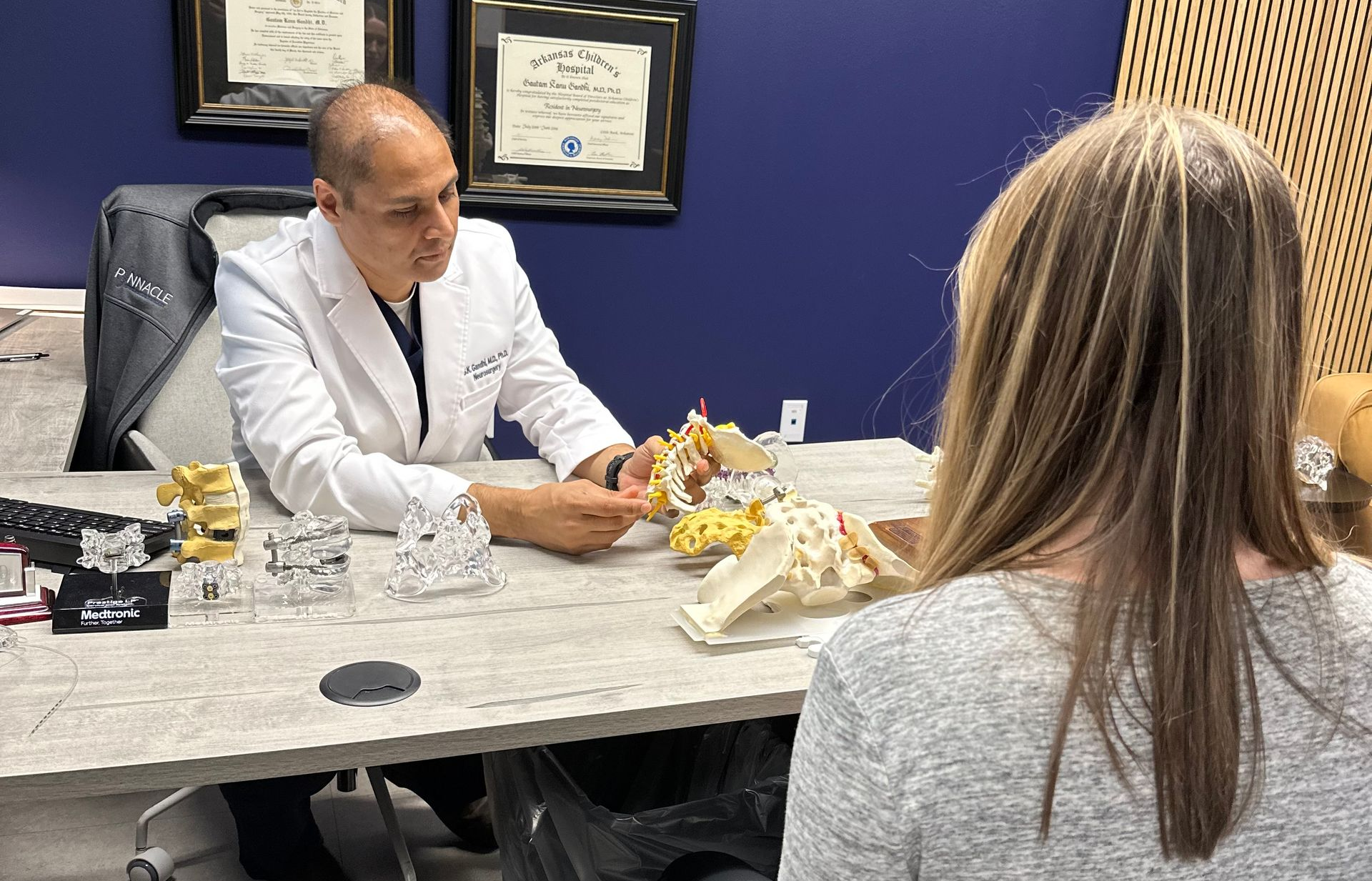
A spine specialist will review your medical history, symptoms, neurological examination, previous treatments, and imaging studies.
Your evaluation may include MRI, CT scans, or X-rays, depending on the suspected condition.
The surgeon will determine whether surgery is necessary, which procedure is most likely to help, and whether it can be performed using minimally invasive techniques.
When Should I See a Spine Specialist?
Consider evaluation if you have persistent neck or back pain, sciatica, radiating arm pain, numbness, weakness, or difficulty walking that has not improved with treatment.
New or progressive weakness, difficulty walking from possible spinal cord compression, or changes in bowel or bladder control require prompt medical evaluation. New loss of bladder or bowel control associated with severe back pain or leg weakness may be a surgical emergency.
Schedule a Consultation
If you are struggling with persistent neck pain, back pain, sciatica, or nerve compression, minimally invasive spine surgery may be an option.
At Pinnacle Spine & Neurosurgery, Dr. Gautam Gandhi offers individualized evaluation and treatment using advanced spinal surgical techniques, including minimally invasive, endoscopic, and robotic-assisted procedures when appropriate.
We proudly serve patients in Little Rock, Conway, Hot Springs, and throughout Central Arkansas.
Contact Pinnacle Spine & Neurosurgery at 501-234-0600 or visit www.pinnaclespine.com to schedule a consultation. If you would like to schedule a consultation, please request a referral from your primary care provider.
Frequently Asked Questions
Is minimally invasive spine surgery major surgery?
Yes. Although minimally invasive procedures use smaller incisions, they still involve operating on structures near the spinal cord, nerves, and blood vessels. All spine surgery carries potential risks.
Can minimally invasive spine surgery treat sciatica?
Yes. If sciatica is caused by a herniated disc or certain forms of nerve compression, minimally invasive decompression or discectomy may be appropriate.
Does minimally invasive spine surgery require general anesthesia?
Many minimally invasive spine surgeries are performed under general anesthesia. However, anesthesia requirements depend on the procedure, patient, and surgical plan.
Can spinal fusion be performed minimally invasively?
Yes. Certain lumbar fusion procedures can be performed using minimally invasive techniques and may incorporate navigation or robotic assistance.
Is minimally invasive spine surgery performed as an outpatient procedure?
Some minimally invasive procedures can be performed on an outpatient basis. Others require overnight observation or hospitalization, depending on surgical complexity and patient health.
Author: Dr. Gandhi
Date Published: October 23, 2026